
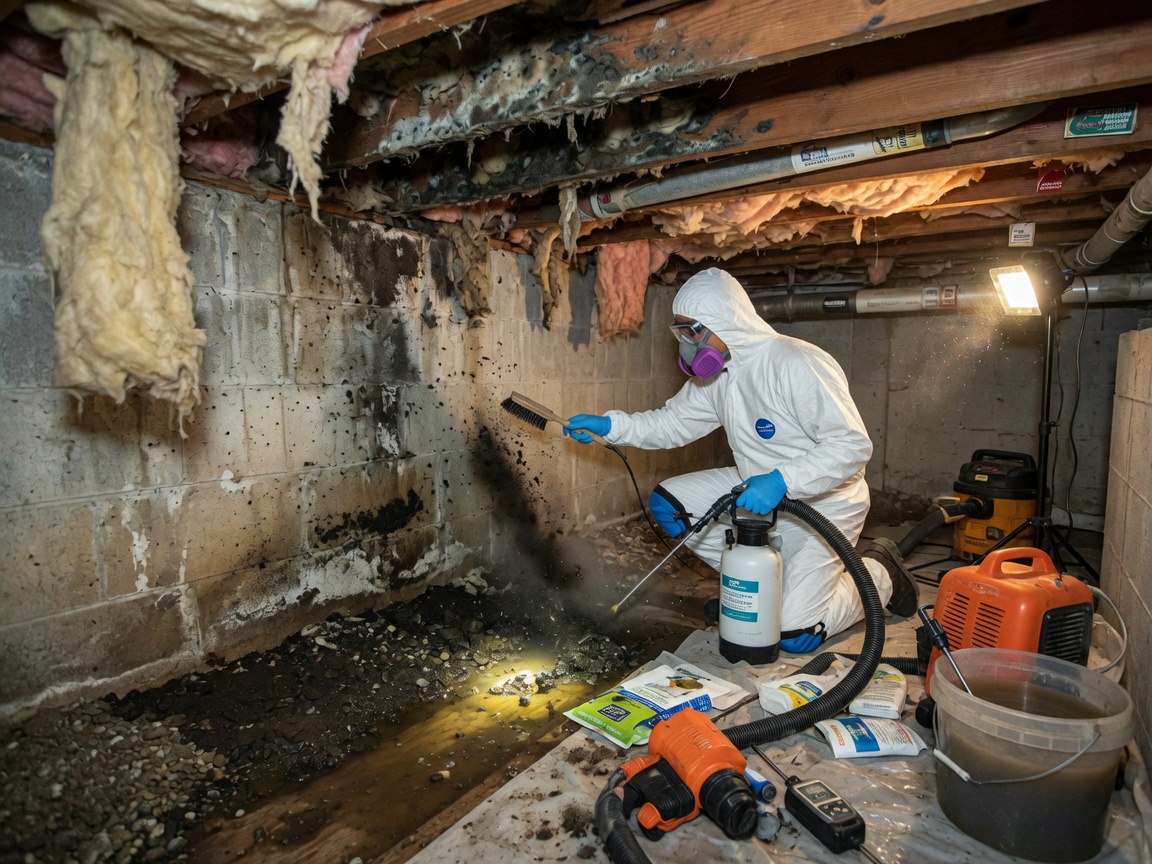
Tampa's humid subtropical climate brings heavy summer rains that push moisture into crawl spaces under older pier-and-beam homes common in Seminole Heights, Ybor City, and Hyde Park. Standing water collects against footings when drainage is poor, feeding mold on joists and subflooring. Technicians must account for limited access points and the risk of disturbing settled dust that carries spores into living areas above.
In Hillsborough County properties near the Hillsborough River or Tampa Bay, tidal influence and high water tables keep soil damp year-round. This forces crews to combine physical removal with targeted drying rather than relying on ventilation alone. Older insulation often holds hidden colonies that standard surface cleaning misses, requiring full removal and replacement to stop recurrence.
Work in Davis Islands and South Tampa crawl spaces frequently involves coordinating with slab-on-grade additions that create cold joints where moisture migrates. Containment barriers and negative air machines protect finished interiors while crews treat exposed wood with EPA-registered antimicrobials. Final clearance testing confirms spore levels match outdoor baselines before encapsulation or dehumidifier placement.
Homeowners in West Tampa and near the Tampa Riverwalk often discover mold only after noticing musty odors during wet seasons. Early intervention prevents structural weakening of floor joists, especially in homes built before modern vapor barriers became standard. Every job includes documentation of moisture sources so repairs address root causes instead of symptoms alone.
Technician insight
In Tampa the thing that catches most people out with Crawl Space Mold Remediation is how wet summers keep soil moisture high even after visible water is gone, especially under 1950s-1970s homes in Seminole Heights where original vents were never designed for our humidity loads. Homeowners often seal vents thinking it helps, but that traps the damp air that feeds mold on joists.
Hyde Park Crawl Space After Summer Storms
Heavy rains left standing water against footings in a 1960s Hyde Park home. Inspection showed mold on multiple joists and saturated insulation. Crews contained the space, removed affected materials, treated the wood, and installed a vapor barrier plus dehumidifier. Odors cleared and moisture readings stayed below 12 percent through the next wet season.
Crawl Space Mold Remediation Services We Offer
✓Crawl Space Encapsulation
Seals dirt floors and walls with heavy-duty vapor barriers to block ground moisture that fuels mold in Tampa's wet summers.
✓Crawl Space Dehumidifier Installation
Places commercial-grade units sized for local humidity loads to maintain dry conditions under homes in Seminole Heights and Ybor City.
✓Wood Joist Mold Treatment
Applies targeted antimicrobials to structural lumber after removal, preventing regrowth on exposed beams common in older Hillsborough County homes.
✓Crawl Space Insulation Replacement
Removes saturated fiberglass or cellulose and installs mold-resistant materials suited to Florida's high-moisture environment.
✓Crawl Space Drainage Correction
Improves grading and adds French drains around foundations in low-lying areas like Davis Islands to stop water intrusion.
✓Negative Air Containment Setup
Creates sealed work zones with HEPA filtration to keep spores from entering living spaces during remediation in multi-story Tampa homes.
Crawl Space Mold Remediation Cost in Florida
| Service | Typical Range | What Affects It |
|---|---|---|
| Initial Crawl Space Inspection | $150–$300 | Varies with access difficulty in older Ybor City or Seminole Heights homes. |
| Full Crawl Space Mold Remediation | $1,200–$3,500 | Depends on colony size, wood treatment needs, and whether encapsulation is added. |
| Dehumidifier Installation | $800–$1,600 | Unit size and electrical access in South Tampa or Davis Islands properties. |
| Encapsulation Add-On | $1,000–$2,200 | Sealed liner and sealing of vents; higher in homes with irregular foundations. |
Ranges are typical for Florida and confirmed with an exact written quote before any work starts.
How it works
- 1
Site Assessment
Technicians enter the crawl space to map moisture sources, test wood moisture content, and identify visible colonies while noting access limitations typical in older Tampa neighborhoods.
- 2
Containment and Air Filtration
Plastic barriers and negative air machines isolate the work area to prevent spore migration into homes in Hyde Park or Downtown Tampa.
- 3
Removal and Treatment
Affected materials are removed, surfaces are cleaned with EPA-registered products, and structural wood receives protective treatment.
- 4
Drying and Verification
Industrial dehumidifiers and air movers reduce moisture levels, followed by post-remediation testing to confirm clearance before any encapsulation.
- 5
Prevention Measures
Final steps include installing vapor barriers or dehumidifiers and advising on grading fixes to address seasonal rain patterns in Hillsborough County.
Pricing
Upfront quotes based on square footage, access difficulty, and moisture extent; most Tampa crawl space jobs fall in mid-range residential pricing.