
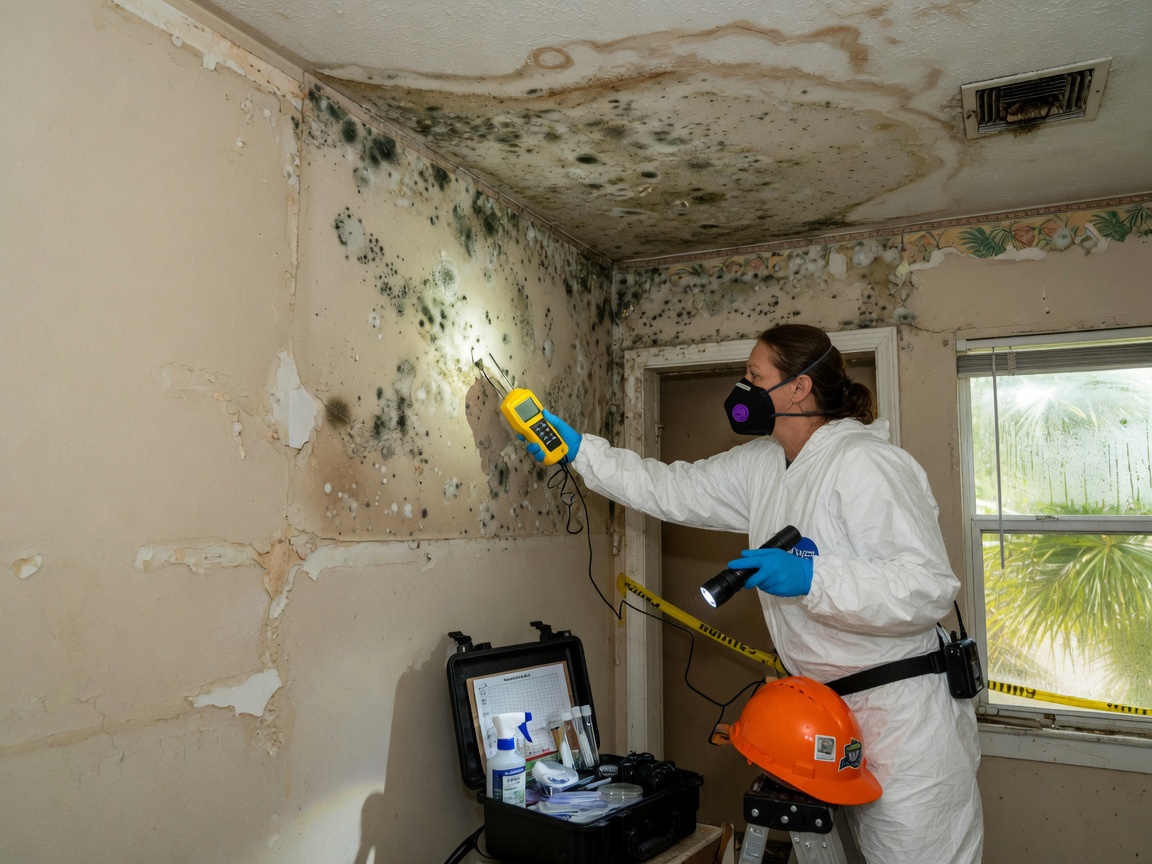
Tampa's humid subtropical climate brings frequent summer rains that push moisture into crawl spaces and wall cavities of pre-1970 homes common in Ybor City Historic District and Seminole Heights. Detection work here starts with checking for elevated humidity levels that allow mold to colonize behind plaster and lath before visible signs appear. Technicians map moisture gradients using pin and pinless meters because older brick and frame construction in these blocks often hides leaks from aging galvanized pipes.
In South Tampa and Davis Islands, slab-on-grade homes built near the bay face tidal influences and poor drainage that keep subfloor moisture high year-round. Proper detection requires pulling baseboards in multiple rooms and checking HVAC returns, since condensation on coils spreads spores through the entire duct system. Hillsborough County properties near the Tampa Riverwalk also see frequent AC failures during wet summers that leave standing water in drip pans for days.
West Tampa and Hyde Park bungalows with original wood floors need careful thermal imaging to locate hidden growth under layers of vinyl or carpet installed over decades. Detection protocols account for the fact that many of these homes lack vapor barriers, so ground moisture migrates upward during the wet season. Reports include photos and lab results from samples taken in each affected zone so homeowners can see exactly where remediation is required before any removal begins.
Technician insight
In Tampa the thing that catches most people out with mold detection is how quickly the humid subtropical summers push moisture through the unvented crawl spaces of 1950s and 1960s homes in Seminole Heights and West Tampa, so a single surface check often misses growth that only shows up once you pull moisture readings behind baseboards.
Hidden Growth Behind Kitchen Cabinets
A South Tampa homeowner noticed musty smells after heavy summer rains but saw no visible mold. Detection found elevated moisture in the slab edge and behind original cabinets where a slow pipe leak had soaked the drywall. Samples confirmed aspergillus growth; the report mapped the exact extent so targeted removal could begin without opening unnecessary walls.
Mold Detection Services We Offer
✓Air Quality Sampling
Collects spore trap and culture samples from multiple rooms to identify mold types present in Tampa homes with high summer humidity.
✓Moisture Mapping
Uses meters and thermal cameras to locate hidden water in walls and floors of older Hyde Park and Seminole Heights properties.
✓Surface Sampling
Takes tape lifts and swabs from suspect areas in Ybor City Historic District homes to confirm active mold growth.
✓HVAC Duct Inspection
Checks coils, plenums and returns for condensation and spore buildup common in South Tampa slab homes during wet months.
✓Crawl Space Assessment
Evaluates soil moisture and ventilation in West Tampa and Brandon area homes where ground humidity drives mold upward.
Mold Detection Cost in Florida
| Service | Typical Range | What Affects It |
|---|---|---|
| Basic Air Sampling Package | $250–$450 | Two to four samples; more rooms increase cost |
| Full Moisture Mapping | $300–$550 | Includes thermal imaging in multi-story homes |
| HVAC System Check | $200–$350 | Covers main unit and accessible ducts |
| Crawl Space Evaluation | $175–$300 | Higher in homes with limited access |
Ranges are typical for Florida and confirmed with an exact written quote before any work starts.
How it works
- 1
Initial Walkthrough
Technician inspects visible areas and asks about recent leaks or AC issues while noting construction type typical to the neighborhood.
- 2
Targeted Sampling
Air, surface and moisture readings are taken in suspected zones using calibrated equipment suited to Tampa's humidity.
- 3
Lab Analysis
Samples are sent for identification of mold species and concentration levels found in Hillsborough County homes.
- 4
Detailed Report
Findings are mapped with photos and recommendations for next steps based on the specific property conditions.
Pricing
Pricing varies by home size, number of samples required and access difficulty in older Tampa construction.