
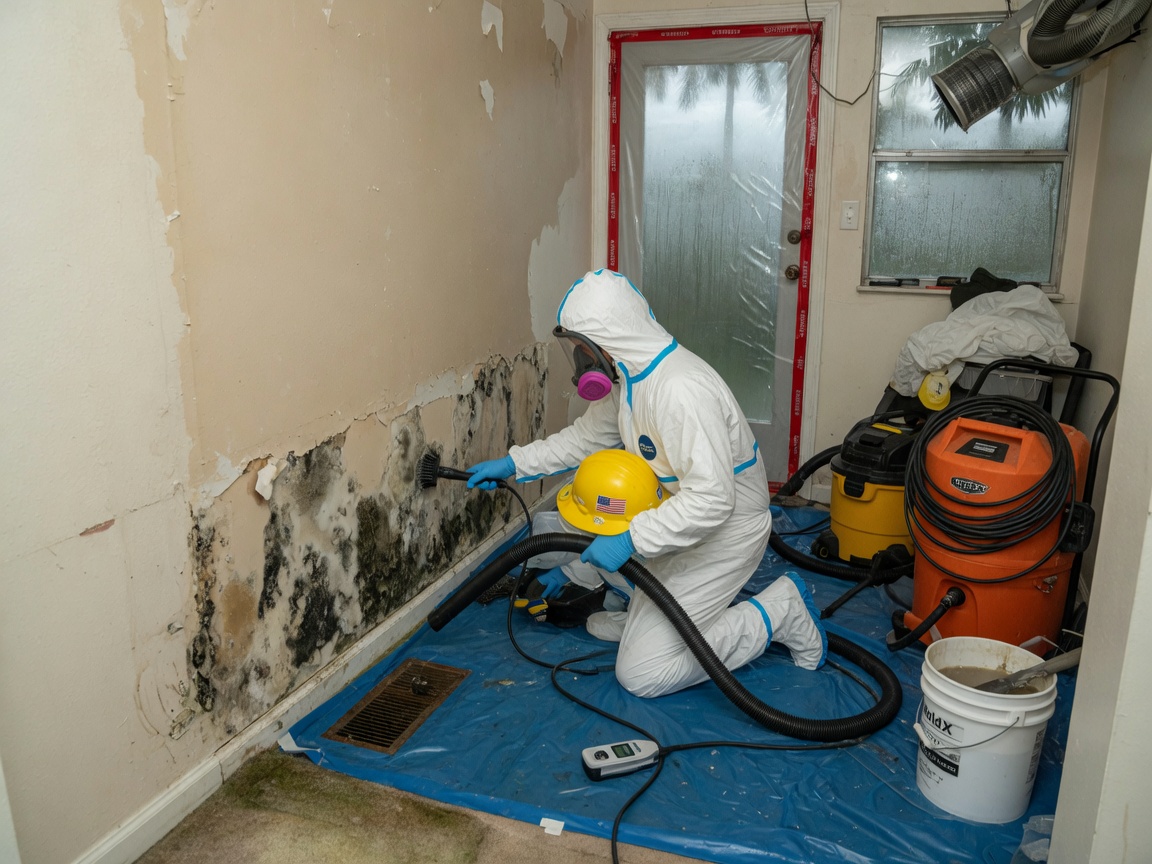
Tampa's humid subtropical climate brings heavy summer rains that push moisture into attics, crawl spaces and stucco walls common in Hyde Park and Seminole Heights homes built before 1980. Mold often hides behind wallpaper or under flooring after roof leaks or poor ventilation, requiring containment before any demolition to keep spores from spreading into living areas. Technicians use negative-air machines and HEPA filtration on every job to meet Hillsborough County health guidelines without disturbing historic elements in Ybor City properties.
Davis Islands and Downtown Tampa waterfront homes face additional risk from tidal surges and high water tables that keep slab foundations damp year-round. Removing mold here means cutting back affected drywall at least 18 inches past visible growth and treating joists with EPA-registered antimicrobials rated for Florida conditions. Skipping the drying phase with industrial dehumidifiers often leads to rapid regrowth once summer rains return.
Mold Removal Near You — Choose Your City
Every city below has its own local Mold Removal page with coverage details.
Palm Beach County
Broward County
Orange County
Hillsborough County
Miami-Dade County
Seminole County
Polk County
Broward
Miami-Dade
Lake County
St. Johns County
Clay County
Orange
St. Lucie County
Duval County
Osceola County
Manatee County
Sumter County
Volusia County
Alachua
Leon
Volusia
Flagler
Pasco
Seminole
Brevard
Palm Beach
Lee County
Brevard County
Sarasota County
Martin County
Pasco County
Hernando County
Santa Rosa County
West Tampa and Brandon properties with older HVAC systems frequently develop mold inside ducts after condensate pan overflows. Full removal includes cleaning or replacing flex duct, sealing joints, and balancing airflow so homeowners avoid recurring issues tied to the region's constant 70-plus percent humidity. Every project ends with a post-remediation verification sample to confirm clearance before reconstruction begins.
Technician insight
In Tampa the thing that catches most people out with Mold Removal is how summer rains and older slab homes in Hyde Park keep moisture trapped under tile even after the visible mold is gone. Homeowners often stop at surface cleaning and then watch it return within weeks once humidity climbs again.
Hidden Growth After Summer Storm
A Seminole Heights homeowner noticed musty odor weeks after heavy rains. Inspection revealed mold behind baseboards and in the crawl space due to rising groundwater. Containment was installed, affected wood was removed, and the space was dried with dehumidifiers. Clearance testing passed and the family returned without further issues.
Mold Removal Services We Offer
✓Attic Mold Removal
Targeted removal of mold colonies in Tampa attics caused by roof leaks and poor ventilation common after wet summers.
✓Crawl Space Mold Remediation
Encapsulation and mold treatment for elevated moisture levels under older homes in South Tampa and Davis Islands.
✓HVAC Mold Cleaning
Duct and coil cleaning to eliminate hidden growth that spreads through central air systems in humid Hillsborough County homes.
✓Post-Flood Mold Removal
Rapid extraction and drying after storm or plumbing failures affecting properties near the Tampa Riverwalk or Lowry Park areas.
✓Black Mold Containment
Full isolation and removal of Stachybotrys growth behind walls in pre-1970s homes throughout Ybor City Historic District.
Mold Removal Cost in Florida
| Service | Typical Range | What Affects It |
|---|---|---|
| Small contained area under 10 sq ft | $350–$650 | Higher when growth is behind tile or in HVAC |
| Standard room remediation | $800–$1,600 | Includes drywall removal and drying in older stucco homes |
| Attic or crawl space job | $1,200–$2,400 | Price rises with insulation replacement and access difficulty |
| HVAC system cleaning add-on | $450–$900 | Depends on number of runs and coil condition |
Ranges are typical for Florida and confirmed with an exact written quote before any work starts.
How it works
- 1
Initial Assessment
Technician inspects affected areas in the home, identifies moisture sources tied to Tampa's climate, and maps visible and hidden growth.
- 2
Containment Setup
Plastic barriers and negative air pressure isolate the work zone to prevent spore migration into clean living spaces.
- 3
Physical Removal
Damaged materials are cut out, surfaces are cleaned with appropriate antimicrobials, and debris is bagged for off-site disposal.
- 4
Drying and Verification
Industrial equipment dries the structure, then clearance testing confirms the space meets safe levels before any rebuild.
Pricing
Most Tampa mold removal jobs fall into mid-range pricing based on square footage and hidden damage discovered during inspection.