
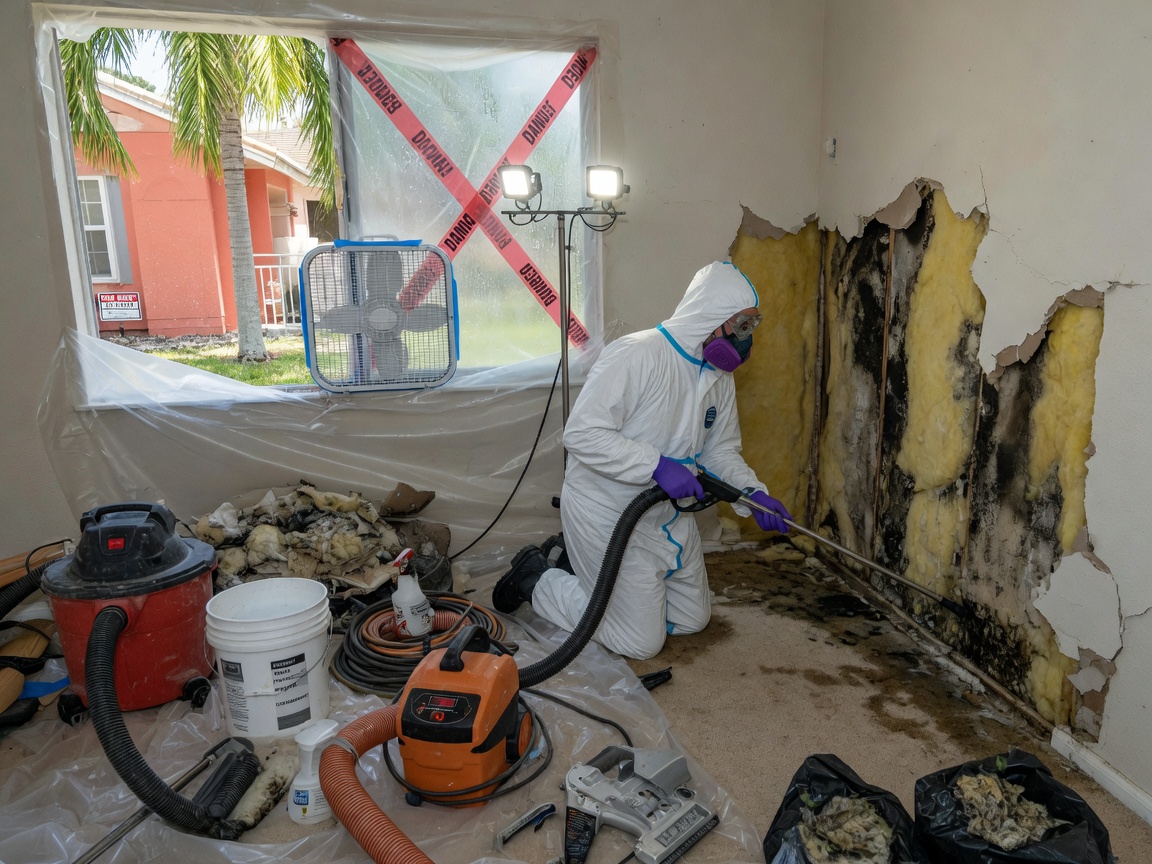
Tampa's wet summers and high humidity create constant moisture challenges in older housing stock found across Seminole Heights and Ybor City Historic District. Wood-frame homes built before modern vapor barriers often trap condensation in attics and crawl spaces, allowing mold to spread behind drywall and under flooring. Remediation crews must account for this by using negative air machines and HEPA filtration to prevent spores from migrating into living areas during removal.
Properties near the Tampa Riverwalk or on Davis Islands face additional risks from occasional flooding and poor drainage that saturates soil around foundations. In these cases, technicians focus on identifying hidden growth in basements or under slabs rather than surface cleaning alone. Containment barriers and antimicrobial treatments become essential to stop regrowth once the wet season returns.
Homeowners in South Tampa and West Tampa frequently encounter mold in HVAC systems due to the combination of coastal air and aging ductwork. Proper remediation requires isolating the system, removing affected insulation, and verifying dryness with moisture meters before reinstallation. Skipping these steps allows spores to recirculate through the home during humid months.
Technician insight
In Tampa, the thing that catches most people out with Residential Mold Remediation is how quickly mold returns in older Seminole Heights and Ybor City homes if roof leaks or poor grading around foundations are not fixed before the next wet summer.
Hidden growth after summer rains
A Hyde Park homeowner noticed musty odors in the living room after heavy July rains. Inspection revealed mold on subflooring from a slow plumbing leak that had saturated the crawl space. Crews contained the area, removed affected wood, dried the soil, and treated joists before reinstalling flooring.
Residential Mold Remediation Services We Offer
✓Attic Mold Remediation
Removes mold growth in Tampa attics caused by roof leaks and poor ventilation during wet summers, restoring airflow and preventing spread to living spaces.
✓Crawl Space Mold Removal
Addresses moisture trapped under homes in low-lying areas like Davis Islands by drying soil and treating mold on joists and insulation common in older Hillsborough County properties.
✓Bathroom Mold Remediation
Targets recurring mold around showers and vanities in humid Tampa homes where ventilation is limited, using targeted removal to protect tile and drywall.
✓HVAC Mold Cleaning
Cleans mold from ducts and coils in South Tampa and Hyde Park residences where constant humidity allows growth inside air handlers and return vents.
✓Kitchen Mold Inspection and Removal
Handles hidden mold under sinks and behind appliances in West Tampa homes, focusing on plumbing leaks that worsen during heavy summer rains.
Residential Mold Remediation Cost in Florida
| Service | Typical Range | What Affects It |
|---|---|---|
| Small localized area | $600–$1,200 | Single room or bathroom; price rises with hidden growth behind walls |
| Attic or crawl space remediation | $1,500–$3,500 | Larger volume and insulation removal increase scope |
| HVAC system cleaning | $800–$2,000 | Ductwork length and coil access affect final cost |
| Whole-home project | $3,000–$6,000 | Multiple rooms plus moisture source repairs |
Ranges are typical for Florida and confirmed with an exact written quote before any work starts.
How it works
- 1
Initial Assessment
Technicians inspect affected rooms, attics, and crawl spaces in the Tampa home using moisture meters to map the full extent of growth.
- 2
Containment Setup
Plastic barriers and negative air pressure isolate the work zone to keep spores from reaching other areas of the property.
- 3
Material Removal
Porous materials with mold are cut out and bagged for disposal while non-porous surfaces receive HEPA vacuuming and antimicrobial treatment.
- 4
Drying And Verification
Industrial dehumidifiers dry the space, followed by post-remediation testing to confirm moisture levels meet safe standards before reconstruction.
Pricing
Costs depend on square footage affected, access difficulty, and whether HVAC or crawl space work is required.