
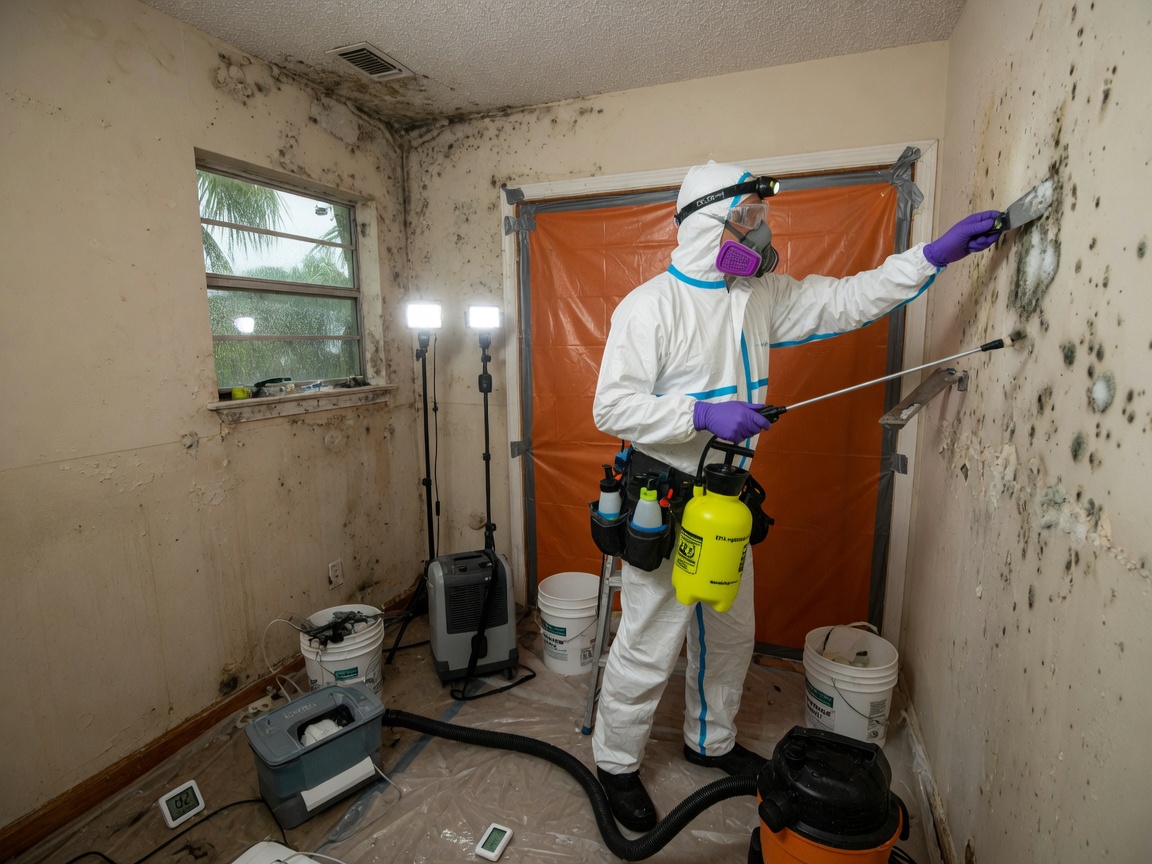
Tampa's humid subtropical climate brings frequent summer rains that drive moisture into crawl spaces and attics of homes built before 1970 in neighborhoods like Ybor City Historic District and Seminole Heights. These older wood-frame and masonry structures often lack modern vapor barriers, allowing hidden growth behind plaster or in HVAC returns. Mitigation here requires isolating affected sections with negative air machines before removing porous materials like drywall or insulation that cannot be salvaged once saturated.
Hillsborough County building codes emphasize proper ventilation and drainage, yet many Davis Islands and South Tampa properties sit on low-lying ground near the Tampa Riverwalk where storm surge and high water tables push moisture upward through slab foundations. Technicians must map moisture levels with meters across multiple rooms rather than relying on visible spots alone, then apply antimicrobial treatments only after source correction to prevent rapid regrowth during the next wet season.
Nearby cities like St. Petersburg and Clearwater share the same coastal humidity patterns, but Tampa jobs frequently involve brick or stucco exteriors in West Tampa that trap water behind cladding. Edge cases include mold migrating through shared walls in Hyde Park duplexes or reaching insulation in homes near Lowry Park Zoo where tree cover reduces airflow. Containment protocols stay in place until post-remediation air sampling confirms levels match outdoor baselines.
Work in Brandon and surrounding areas often centers on post-rain events where roof leaks around skylights or bathroom exhaust fans allow colonies to form in cellulose insulation. Removing affected sections without disturbing adjacent clean areas demands precise cutting and bagging techniques to avoid spreading spores through the home's central air system.
Technician insight
In Tampa, the thing that catches most people out with Mold Mitigation is how quickly mold returns in Seminole Heights bungalows if the original roof leak or poor soffit venting is not fixed before we leave; the wet summers keep feeding moisture back into the same wood framing.
Hidden Growth After Summer Rains in Hyde Park
A Hyde Park homeowner noticed musty odors after weeks of afternoon thunderstorms. Inspection found elevated moisture behind bathroom drywall where an exhaust fan had failed. Containment was installed, saturated drywall and insulation removed, and the cavity dried before new materials were installed with improved ventilation.
Mold Mittigation Services We Offer
✓Crawl Space Mold Treatment
Addresses growth under older Tampa homes where high water tables and poor ventilation allow moisture to collect on joists and insulation.
✓Attic Insulation Removal
Removes contaminated cellulose or fiberglass in Seminole Heights and Ybor City attics after roof leaks or poor ridge venting during wet summers.
✓HVAC Duct Mold Cleaning
Cleans and treats ductwork in South Tampa and Davis Islands homes where condensation from high humidity spreads spores through central systems.
✓Bathroom Moisture Remediation
Targets tile and drywall damage around showers in Hyde Park properties where exhaust fan failures allow persistent condensation.
✓Post-Flood Containment
Sets up barriers and extracts water-damaged materials in West Tampa and Downtown Tampa after heavy rains near the Tampa Riverwalk.
Mold Mittigation Cost in Florida
| Service | Typical Range | What Affects It |
|---|---|---|
| Initial Moisture Inspection | $150–$350 | Larger homes or multiple stories increase time required. |
| Crawl Space Treatment | $800–$2,200 | Depends on square footage and whether insulation must be replaced. |
| Attic Mold Removal | $1,200–$3,500 | Varies with insulation depth and roof access in older Tampa homes. |
| HVAC Duct Cleaning | $600–$1,800 | Affected by system size and number of returns in South Tampa properties. |
Ranges are typical for Florida and confirmed with an exact written quote before any work starts.
How it works
- 1
On-Site Assessment
Technician inspects all affected rooms using moisture meters and thermal imaging to locate hidden growth in walls or under floors.
- 2
Containment Setup
Plastic barriers and negative air machines isolate the work zone to prevent spore migration to clean areas of the home.
- 3
Material Removal
Porous items like drywall, carpet, or insulation are cut out and bagged for disposal while non-porous surfaces receive cleaning.
- 4
Drying and Treatment
Dehumidifiers and air movers reduce moisture levels followed by EPA-registered antimicrobials on remaining surfaces.
- 5
Final Clearance
Air sampling confirms spore counts match outdoor levels before barriers come down and the space is returned to use.
Pricing
Upfront quotes provided after inspection; final cost depends on square footage, material types, and access difficulty.