
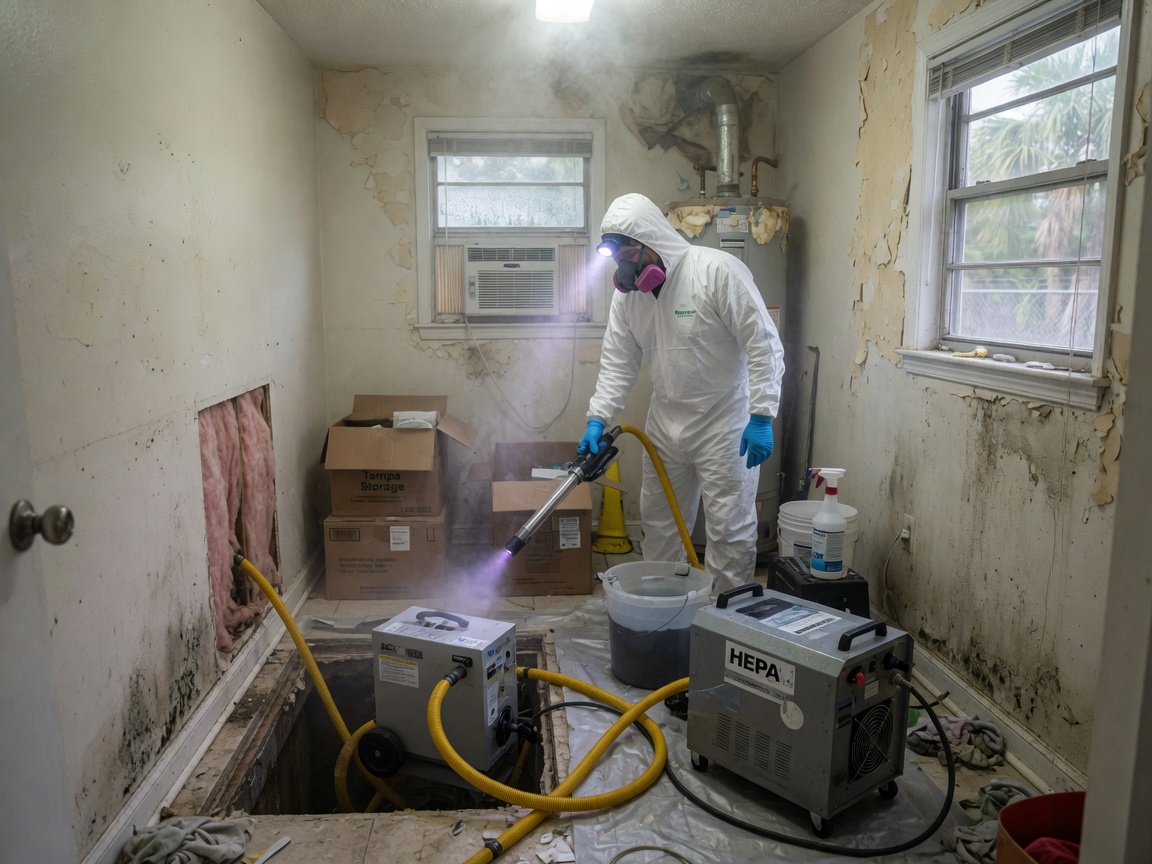
Tampa's humid subtropical weather with heavy summer rains drives moisture into older housing stock throughout Hillsborough County, especially in neighborhoods like Seminole Heights and Ybor City where many homes predate modern vapor barriers. Mold odor removal here requires locating moisture trapped behind plaster, in crawl spaces, or within HVAC ducts rather than simply ventilating. Technicians must account for the way wet summers allow odors to migrate into porous materials like lath-and-plaster walls common in Hyde Park and Davis Islands properties.
Effective treatment starts with source identification using moisture meters and borescopes to avoid unnecessary demolition in tight historic district lots. Odor-neutralizing agents are applied after physical removal of affected materials, followed by dehumidification calibrated to Tampa's high ambient humidity levels. Failure to address the underlying water intrusion from summer storms or poor drainage near the Hillsborough River often allows smells to return within weeks.
Homeowners in South Tampa and West Tampa frequently mistake musty smells for simple humidity when the real issue is slow leaks from older plumbing or condensation in unconditioned attics. Proper mold odor removal includes post-treatment air sampling to confirm volatile organic compounds have dropped below detectable thresholds. Work in these areas must also respect the dense lot layouts that limit equipment access around Tampa Riverwalk-adjacent homes.
Technician insight
In Tampa, the thing that catches most people out with Mold Odor Removal is assuming the smell comes from visible growth when it is actually trapped behind plaster in 1920s-1950s homes throughout Ybor City and Seminole Heights after months of high summer humidity. Skipping the crawl space or attic check almost always means the odor returns once the next wet season hits.
Hyde Park Wall Odor Job
A homeowner noticed a persistent musty smell in a downstairs bedroom after heavy summer rains. Inspection revealed moisture trapped behind original plaster from a slow roof leak common in the neighborhood. Crews opened limited access points, treated the cavity, and ran dehumidification for 48 hours. The odor did not return after the next storm cycle.
Mold Odor Removal Services We Offer
✓HVAC Duct Mold Odor Extraction
Removes musty smells circulating through central air systems common in Tampa ranch homes by cleaning and treating ductwork after moisture events.
✓Wall Cavity Odor Neutralization
Targets hidden growth behind drywall in older Seminole Heights and Ybor City homes using targeted injection of odor-binding agents without full wall removal.
✓Attic Condensation Odor Treatment
Addresses persistent smells from poor ventilation in hot, humid attics typical of Davis Islands and South Tampa properties during wet summers.
✓Crawl Space Odor Remediation
Eliminates ground moisture odors rising into living spaces in Brandon and West Tampa homes built on slab or pier foundations.
✓Post-Flood Odor Removal
Neutralizes smells left after storm flooding common near the Tampa Riverwalk and Lowry Park areas by drying and treating saturated materials.
Mold Odor Removal Cost in Florida
| Service | Typical Range | What Affects It |
|---|---|---|
| Initial Odor Assessment | $150–$300 | Higher in multi-story homes or those with limited access in historic districts |
| Single Room Odor Treatment | $400–$850 | Depends on wall cavity access and material removal needs |
| Whole-Home HVAC Odor Service | $900–$1,600 | Includes duct cleaning; increases with system size common in South Tampa |
| Crawl Space or Attic Odor Job | $600–$1,200 | Varies with ventilation upgrades required after wet summers |
Ranges are typical for Florida and confirmed with an exact written quote before any work starts.
How it works
- 1
Source Inspection
Technicians inspect affected zones in the home using moisture detection tools to locate the origin of the odor in Tampa's humid conditions.
- 2
Containment Setup
Negative air machines isolate the work area to prevent odor particles from spreading to unaffected rooms in densely built neighborhoods.
- 3
Material Removal and Treatment
Affected porous materials are removed and remaining surfaces receive EPA-registered odor neutralizers calibrated for subtropical humidity.
- 4
Drying and Verification
Dehumidifiers run until moisture levels stabilize, followed by air testing to confirm odors are eliminated before clearance.
Pricing
Pricing varies by home age, square footage, and extent of hidden moisture in Hillsborough County properties.