
2026-08-19 · Marcus Purdee
How Florida’s Humidity Causes Mold Growth Indoors
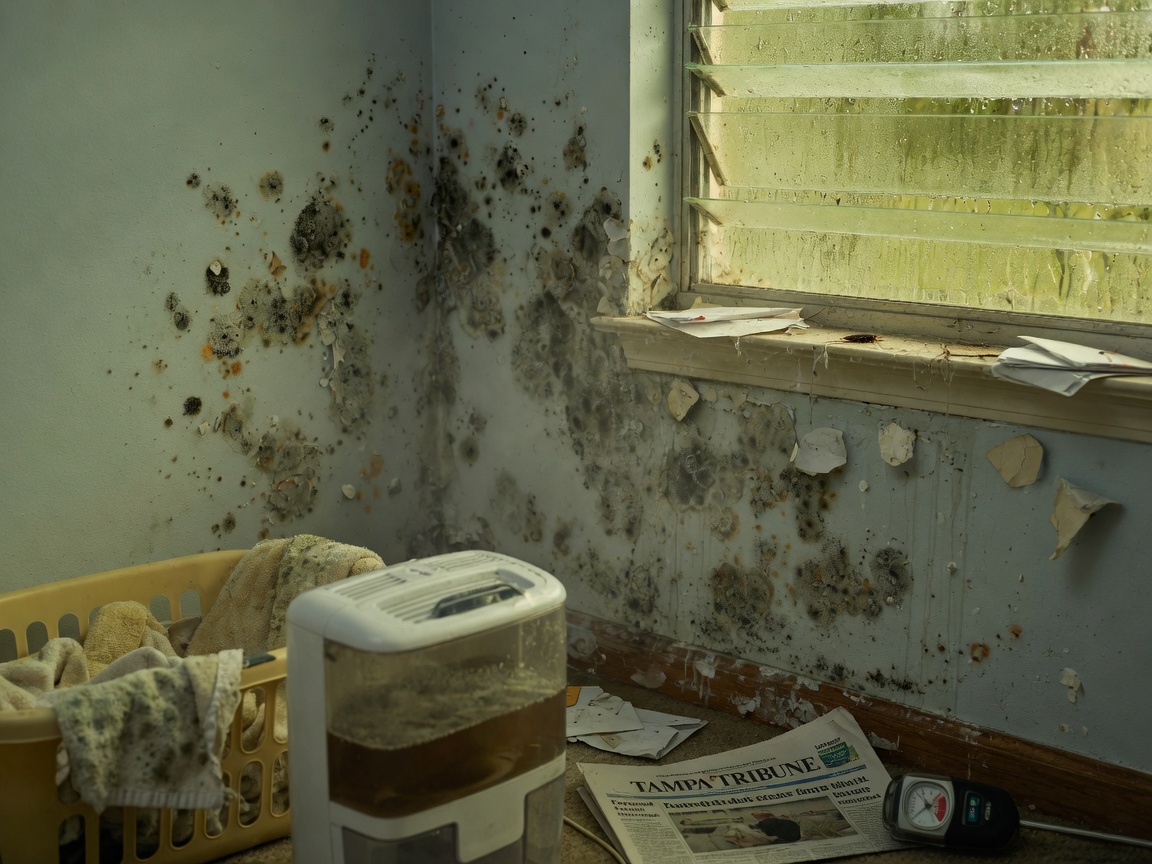
Florida's humidity drives indoor mold growth when relative humidity stays above 60 percent for more than a few hours, allowing spores to settle on damp surfaces and begin colonizing within 24 to 48 hours. In Hillsborough County homes, the combination of warm temperatures and frequent rain keeps outdoor air saturated, so any indoor moisture source quickly pushes conditions past the threshold mold needs.
How Tampa's Humid Subtropical Climate Fuels Growth
Tampa experiences a humid subtropical climate with wet summers that deliver frequent afternoon thunderstorms and sustained high dew points. When outdoor air at 80 degrees and 75 percent relative humidity enters homes through open windows or unsealed ducts, it raises indoor moisture levels fast. Neighborhoods such as Seminole Heights and Ybor City often have older plaster and lath walls that absorb and hold this moisture longer than modern drywall, giving mold more time to establish colonies behind baseboards. The same pattern appears in South Tampa and Davis Islands, where elevated water tables and proximity to the bay increase vapor pressure on slab foundations. Homeowners notice musty odors first in bathrooms and laundry rooms because those spaces already generate steam that compounds the outdoor load.
Moisture Pathways Common in Hillsborough County Homes
Air-conditioned homes in West Tampa and Hyde Park can still develop hidden moisture when HVAC systems short-cycle and fail to remove enough humidity. Roof leaks around older tile in Downtown Tampa properties drip onto attic insulation, creating pockets where relative humidity never drops below 70 percent. Crawl spaces under 1960s and 1970s ranch homes trap ground moisture that migrates upward through floor joists, especially after the wet season peaks. Condensation on uninsulated supply ducts in garages and utility rooms adds another steady source. Each of these pathways allows mold to grow on organic materials like wood framing or paper-faced drywall without visible water stains until the colony is well established.
Why Mold Thrives Indoors During Wet Summers
During the June-through-September wet period, outdoor humidity rarely falls below 65 percent even at night. When residents run air conditioning intermittently or leave windows cracked for cross-breezes along the Tampa Riverwalk corridor, the indoor environment stays in the mold-friendly range. In homes with limited attic ventilation, trapped heat and moisture create microclimates where surface temperatures on sheathing drop below the dew point, producing condensation every evening. The result is visible growth on ceiling joists within a single rainy season. Why Mold Grows So Quickly in Florida Homes details how these seasonal patterns accelerate the timeline from spore landing to visible colonies.
Practical Steps to Lower Indoor Humidity
Maintaining indoor relative humidity between 45 and 55 percent requires consistent dehumidification and airflow. Run the central air system fan on continuous low speed during peak humidity hours to keep air moving across the evaporator coil. Use exhaust fans in bathrooms for at least 20 minutes after showers, and vent clothes dryers directly outside rather than into attics or crawl spaces. In older homes common to Seminole Heights, sealing attic bypasses and adding insulation above ceilings reduces the surface area where warm, moist air can condense. Checking and cleaning condensate drains monthly prevents overflow that reintroduces moisture into the living space. These steps address the root conditions that allow mold to start rather than treating growth after it appears.
When to Seek Professional Assessment
Persistent musty odors or visible discoloration on walls in areas like Brandon or Clearwater-adjacent neighborhoods signal that humidity control alone may not resolve an existing colony. Professional inspection can locate hidden growth behind tile in bathrooms or inside HVAC cabinets where homeowners cannot safely reach. Mold Remediation addresses both the moisture source and the affected materials so the same humidity conditions do not restart the cycle. Residential Mold Remediation teams familiar with Tampa's housing stock know which construction details in Hyde Park bungalows or Davis Islands waterfront homes most often hide growth. Early evaluation prevents small colonies from spreading into larger structural areas during the next wet summer.