
2026-08-19 · Marcus Purdee
Why Mold Grows So Quickly in Florida Homes
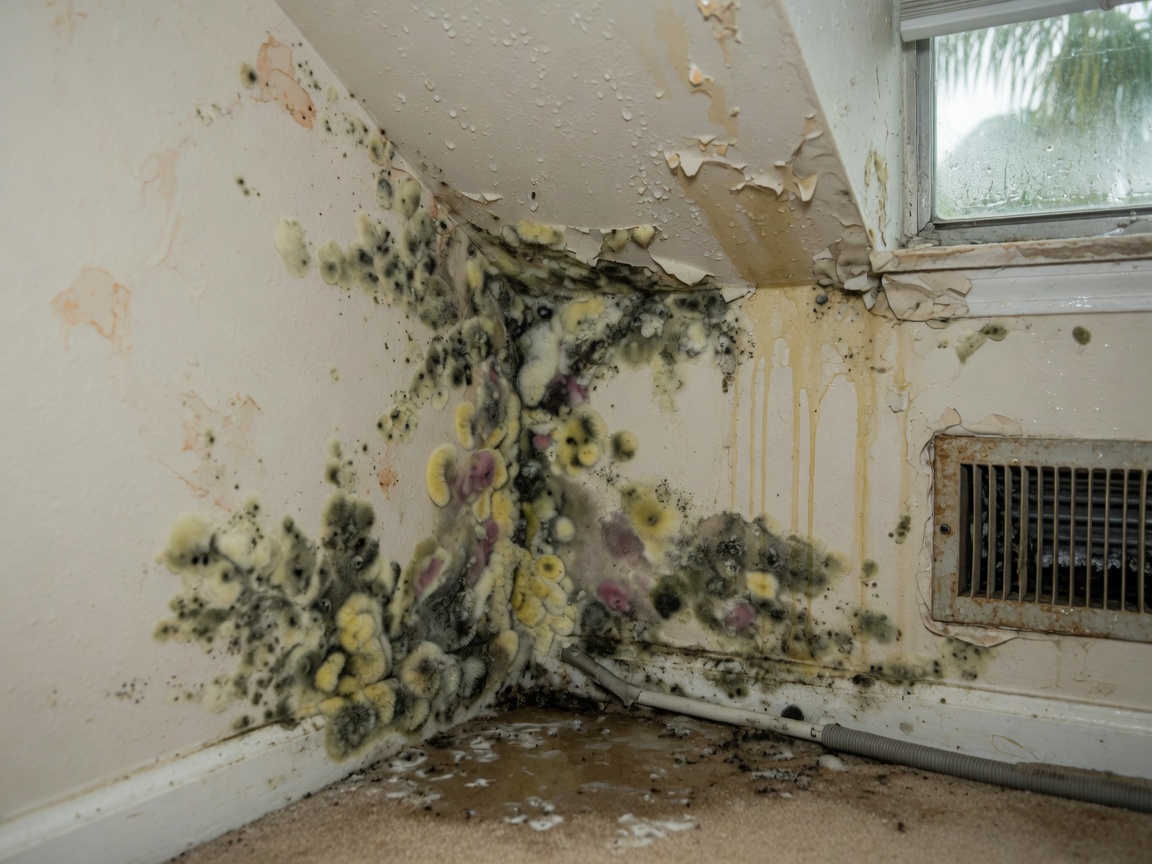
Florida's humid subtropical climate with wet summers allows mold to start growing in Tampa homes within 24-48 hours once moisture exceeds typical thresholds. Hillsborough County properties face consistent high humidity that keeps indoor relative humidity above 60 percent for weeks at a time, especially after afternoon thunderstorms. Homes in Downtown Tampa and Hyde Park often retain that moisture in wall cavities and under flooring because many structures predate modern vapor barriers.
Tampa's Wet Summers and Daily Humidity Patterns
Summer rainfall in Hillsborough County routinely delivers 6-8 inches per month, with sudden downpours that overwhelm gutters on older roofs in Ybor City Historic District. Once water enters attics or crawl spaces, the 80-90 degree temperatures accelerate spore germination. Residents near the Tampa Riverwalk notice the same pattern after high tides push moisture into lower levels of Davis Islands homes. These repeated wetting events leave behind conditions where mold colonies double in size every 24 hours until drying occurs.
Older Housing Stock in Neighborhoods Like Seminole Heights and West Tampa
Many Seminole Heights and West Tampa homes built before 1960 contain plaster walls and cast-iron plumbing that corrodes over decades. Small leaks behind tubs or under sinks go unnoticed until mold has already spread across 10-20 square feet of drywall. South Tampa bungalows with raised foundations still trap humidity in enclosed crawl spaces during the wet season, while newer Davis Islands condos face similar issues from HVAC condensate lines that drip into wall cavities. Each of these construction details shortens the time between water intrusion and visible growth.
How HVAC Systems and Poor Ventilation Speed Colonization
Central air systems in Tampa homes run constantly during summer, yet dirty coils and clogged drains create standing water that feeds mold directly into living spaces. Homes near Busch Gardens or Lowry Park Zoo often have attic insulation that holds moisture after roof leaks, allowing growth on rafters within days. Mold in HVAC Systems: What Florida Homeowners Need to Know explains why filters must be changed every 30-45 days in this climate. Without proper airflow, bathrooms and laundry rooms in Hyde Park properties stay above 70 percent humidity long after showers end.
Why Prompt Drying Matters in Hillsborough County
Once a leak occurs, the window for preventing widespread mold closes quickly because local temperatures rarely drop below 70 degrees at night. Water that reaches subflooring in Brandon or nearby St. Petersburg homes can wick upward into baseboards within 12 hours. Mold in Drywall: When Can It Be Cleaned and When Should It Be Replaced? details how gypsum paper facing supports growth once saturated. Residential Mold Remediation crews in Tampa routinely respond to calls from South Tampa after just two days of elevated moisture because colonies have already crossed into multiple rooms.
Understanding these local triggers helps homeowners in Clearwater and surrounding areas recognize when conditions favor rapid growth. Checking for musty odors after storms and monitoring humidity with simple meters reduces the chance of hidden colonies forming behind walls in Ybor City or Seminole Heights properties. MoldFix FL remains open 24 hours, 7 days a week to address issues before they expand further.