
2026-08-19 · Marcus Purdee
Mold in HVAC Systems: What Florida Homeowners Need to Know
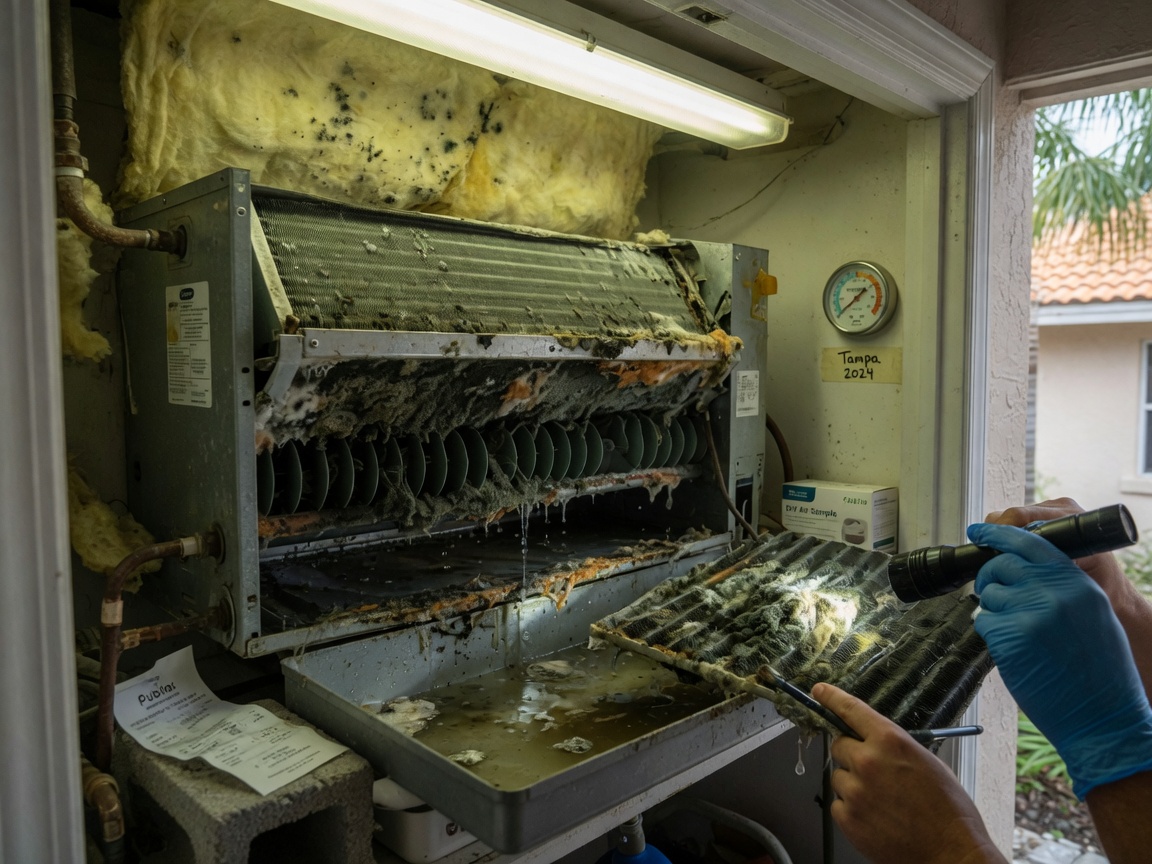
In Tampa's humid subtropical climate with wet summers, mold often begins growing in HVAC systems within 48 hours after any moisture intrusion from condensation or leaks, especially in homes built before 1980 across Hillsborough County.
How Local Climate and Housing Affect HVAC Systems
Tampa's frequent afternoon thunderstorms and high humidity levels drive excess moisture into ductwork and coils, particularly in South Tampa and Davis Islands where older homes feature original metal ducts that trap condensation. Neighborhoods like Seminole Heights and West Tampa see similar issues because many properties sit on low-lying terrain near the Tampa Riverwalk, increasing flood risk during heavy rains. This environment shortens equipment lifespan compared to drier regions, with coils and insulation showing visible growth faster than in nearby cities such as Brandon or St. Petersburg. Homeowners in Ybor City Historic District properties often encounter compounded problems when historic renovations fail to upgrade ventilation.
Recognizing Mold Growth in Tampa HVAC Units
Visible black specks on vents or musty odors when the system runs signal early stages, common in Downtown Tampa condos with shared systems. In Hyde Park bungalows, residents report allergy spikes during summer months when pollen mixes with hidden growth inside return ducts. Checking filters monthly reveals discoloration or slime on evaporator coils, a direct result of the area's 70-plus percent average humidity. These signs differ from general household mold because HVAC circulation spreads spores through every room, affecting air quality in Lowry Park Zoo-adjacent homes where outdoor moisture enters easily.
Practical Steps for Florida Homeowners
Shut off the system immediately upon suspicion to prevent further spread, then inspect accessible areas like the air handler in the attic or garage. Document moisture sources such as roof leaks common after wet summers in West Tampa. Replace disposable filters with higher MERV ratings suited to local conditions, and schedule professional coil cleaning every 12-18 months. For properties near Busch Gardens or the Florida Aquarium, elevated outdoor humidity makes DIY cleaning insufficient for deep ductwork. Always test humidity levels indoors, keeping them below 50 percent to limit recurrence.
When Professional HVAC Mold Removal Becomes Necessary
Persistent odors or visible growth beyond filters requires HVAC mold removal to avoid health impacts in family homes. Hillsborough County residents benefit from technicians familiar with local building codes and flood zones around Davis Islands. Compare this to standard mold remediation by reviewing Mold Removal vs. Mold Remediation: What Is the Difference?. Early intervention prevents escalation in older Seminole Heights stock where duct replacement costs rise quickly. Monitor for recurrence after heavy rains typical in the region.
Long-Term Prevention in Tampa Homes
Upgrade to UV lights or antimicrobial coatings on coils, effective against the constant moisture from wet summers. Ensure proper drainage around foundations in South Tampa to reduce basement humidity that feeds into systems. Annual inspections catch issues before they reach living spaces near the Tampa Riverwalk. Homeowners in Clearwater or Brandon facing similar conditions can adapt these steps, but local soil saturation in Hillsborough County demands extra attention to crawl spaces connected to HVAC returns. Consistent maintenance keeps systems running efficiently year-round.