
2026-08-19 · Marcus Purdee
Mold Remediation in Florida: Complete Guide for Homeowners
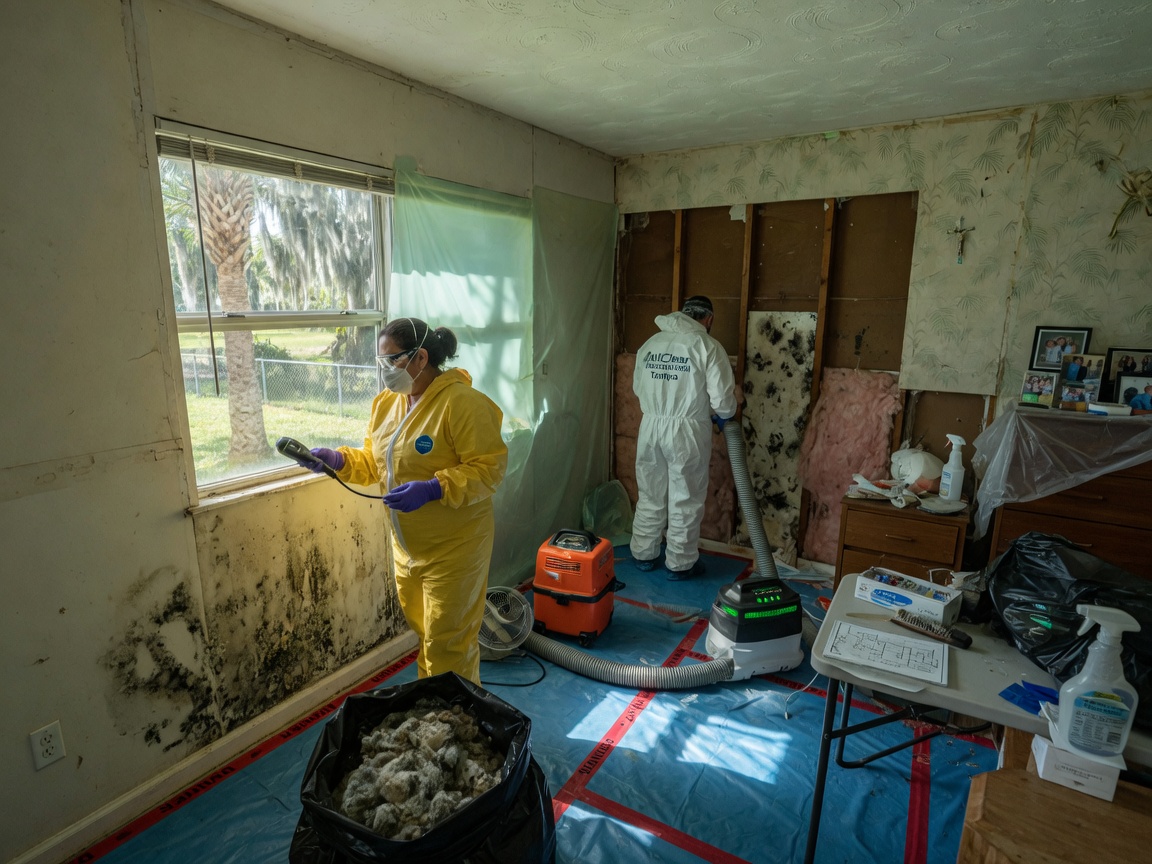
Mold remediation in Florida starts with professional inspection and containment, followed by removal of affected materials and moisture control, especially in Tampa where wet summers push indoor humidity above 60 percent for months. Homeowners in areas like Hyde Park and Seminole Heights face repeated challenges because many homes date to the 1920s through 1960s with original plaster, crawl spaces, and limited ventilation.
Florida's Climate and Mold Growth Patterns
Tampa sits in a humid subtropical zone where afternoon thunderstorms dump several inches of rain each week from June through September. This constant moisture load penetrates stucco, brick, and older wood-frame homes common in Ybor City Historic District and West Tampa. When indoor relative humidity stays elevated, mold colonies form on drywall, subfloors, and HVAC registers within 48 hours. The same pattern appears in Davis Islands and South Tampa properties near the bay where salt air adds corrosion to metal ductwork. Residents in nearby Brandon and St. Petersburg report similar outbreaks after prolonged rainy periods because the water table stays high and evaporation is slow.
Typical Problem Areas in Hillsborough County Homes
Crawl spaces under 1950s bungalows in Seminole Heights trap ground moisture that rises into floor joists. Attics in Hyde Park Victorians lack ridge vents, so roof leaks from summer storms soak insulation. Bathroom exhaust fans that vent into attics rather than outdoors create perfect conditions for growth behind tile in South Tampa condos. HVAC systems in Downtown Tampa high-rises often develop condensation on coils when filters are neglected during peak humidity months. These locations require targeted containment so spores do not spread through shared walls or ductwork.
Step-by-Step Remediation Process
A thorough inspection identifies moisture sources and hidden growth using moisture meters and borescopes. Containment follows with plastic sheeting and negative air machines to keep spores from migrating to unaffected rooms. Removal includes cutting out saturated drywall, HEPA vacuuming surfaces, and applying antimicrobial agents where permitted by material type. Drying uses commercial dehumidifiers sized for the square footage until wood moisture content drops below 12 percent. Final clearance testing confirms spore counts match outdoor baselines before reconstruction begins. Homeowners can review the full residential process at residential mold remediation.
Preventing Recurrence After Remediation
Once visible mold is gone, controlling indoor humidity below 50 percent year-round is essential. Running the central air conditioner continuously during wet summers, using whole-house dehumidifiers in crawl spaces, and cleaning gutters quarterly all reduce moisture load. Checking attic insulation for roof leaks after every named storm prevents hidden regrowth. Replacing bathroom fans that vent indoors and sealing foundation cracks in older West Tampa homes stops ground moisture from entering. For deeper background on how local humidity drives these issues, see how Florida's humidity causes mold growth indoors.
When to Call for Professional Help
Visible black spots on walls, musty odors that return after cleaning, or water stains on ceilings signal the need for trained assessment. DIY sprays often mask the problem while leaving roots inside wall cavities. Properties near the Tampa Riverwalk or Lowry Park Zoo that experienced flooding during recent storms benefit from immediate evaluation because standing water under slabs can feed mold for weeks. Teams available 24 hours, 7 days a week can respond before colonies expand into HVAC systems or neighboring units.