
2026-08-19 · Marcus Purdee
How Much Does Mold Remediation Cost in Florida?
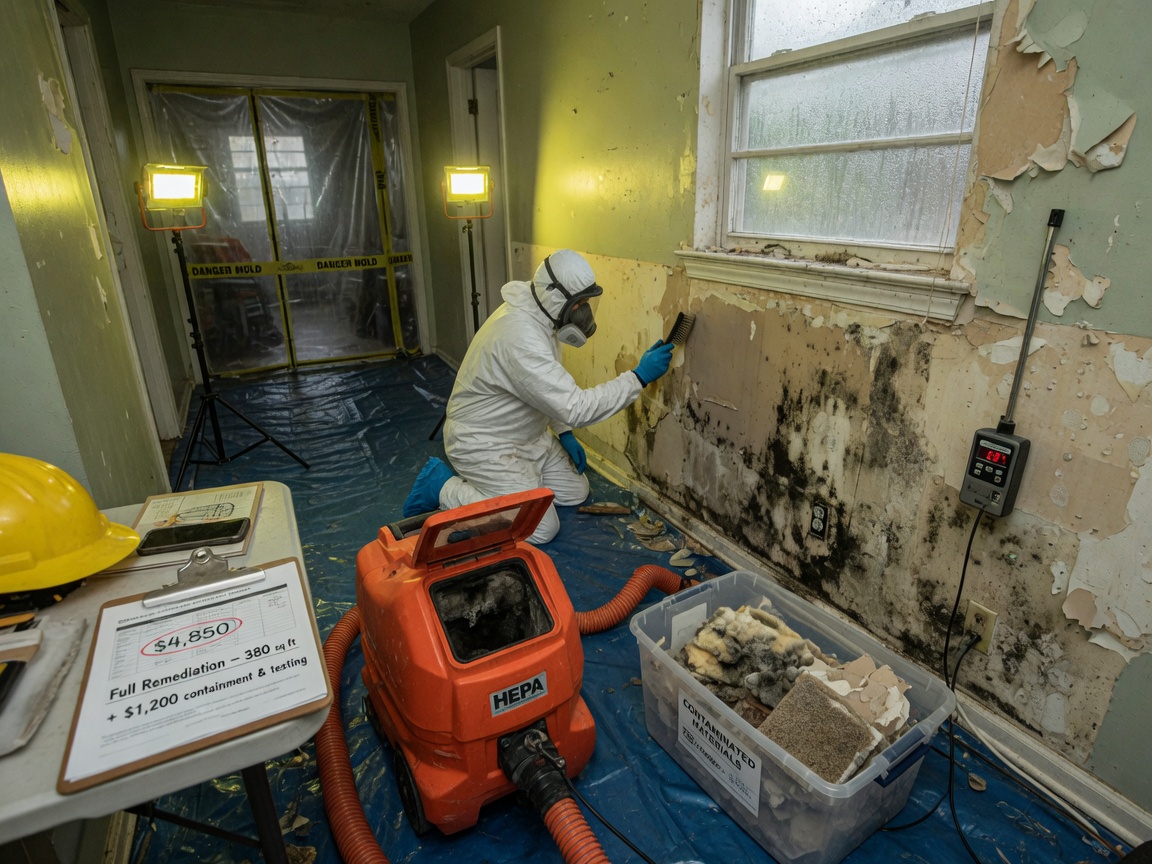
Mold remediation costs in Florida generally range from $1,200 to $6,500 for residential work, with most Tampa jobs falling between $1,800 and $4,800 once inspection confirms the scope. These figures shift based on square footage affected, whether the issue sits in a crawl space or attic, and how quickly moisture entered the structure. In Hillsborough County the humid subtropical climate with wet summers keeps indoor humidity high enough that even small leaks can expand quickly across drywall and insulation.
Cost Drivers in Tampa's Housing Stock
Tampa neighborhoods contain a mix of 1920s bungalows in Seminole Heights and mid-century concrete-block homes in South Tampa and Davis Islands. Older plaster and lathe walls in Ybor City Historic District often require more careful containment than newer drywall assemblies found near the Tampa Riverwalk. Wet summers bring frequent afternoon storms that test roof flashing and window seals, while the flat terrain around West Tampa and Downtown Tampa allows water to pool against foundations for days. These conditions increase labor time because crews must address both visible growth and hidden moisture behind baseboards. Properties near the Florida Aquarium or Lowry Park Zoo sit on soils that retain water longer, raising the chance that a single pipe leak turns into widespread subfloor damage.
Typical Price Ranges by Project Type
Small bathroom jobs under 100 square feet usually run $1,200 to $2,400 when growth stays on tile and grout. Medium attic or crawl space projects in Hyde Park or Brandon commonly land between $2,800 and $4,500 once HVAC registers are sealed and insulation is removed. Larger whole-home or commercial spaces in areas like St. Petersburg or Clearwater can reach $5,000 to $6,500 when multiple rooms and ductwork require treatment. These ranges exclude reconstruction; they cover containment, HEPA filtration, antimicrobial application, and post-remediation clearance testing only.
How Local Weather Patterns Change the Job
Florida's wet summers mean crews often arrive after 4–6 inches of rain in a single afternoon, which saturates stucco and forces extra drying time before any removal begins. In contrast, drier winter months allow faster turnaround but still require dehumidification because indoor relative humidity rarely drops below 60 percent. Homes near Busch Gardens or the Tampa Riverwalk face additional airflow challenges from constant breezes that push spores through soffits and into wall cavities. Why Mold Grows So Quickly in Florida Homes explains the seasonal patterns that drive these extra steps.
Residential vs. Broader Remediation Scope
Most Tampa homeowners need residential mold remediation that focuses on living spaces rather than large-scale commercial protocols. The difference appears in containment methods and disposal volume. Mold Removal vs. Mold Remediation: What Is the Difference? clarifies why simply removing visible patches without addressing the moisture source leads to repeat growth within months. Owners in Brandon or Clearwater who schedule work during the wet season should expect an extra day of drying equipment compared with jobs booked in January.
MoldFix FL remains available Open 24 Hours, 7 Days a Week for emergency calls across Hillsborough County and nearby cities. Homeowners who notice musty odors after a storm or staining on drywall should request an inspection before growth spreads further into insulation or subfloors.