2026-08-19 · Marcus Purdee
Hurricane and Flood Mold Remediation: A Florida Homeowner’s Guide
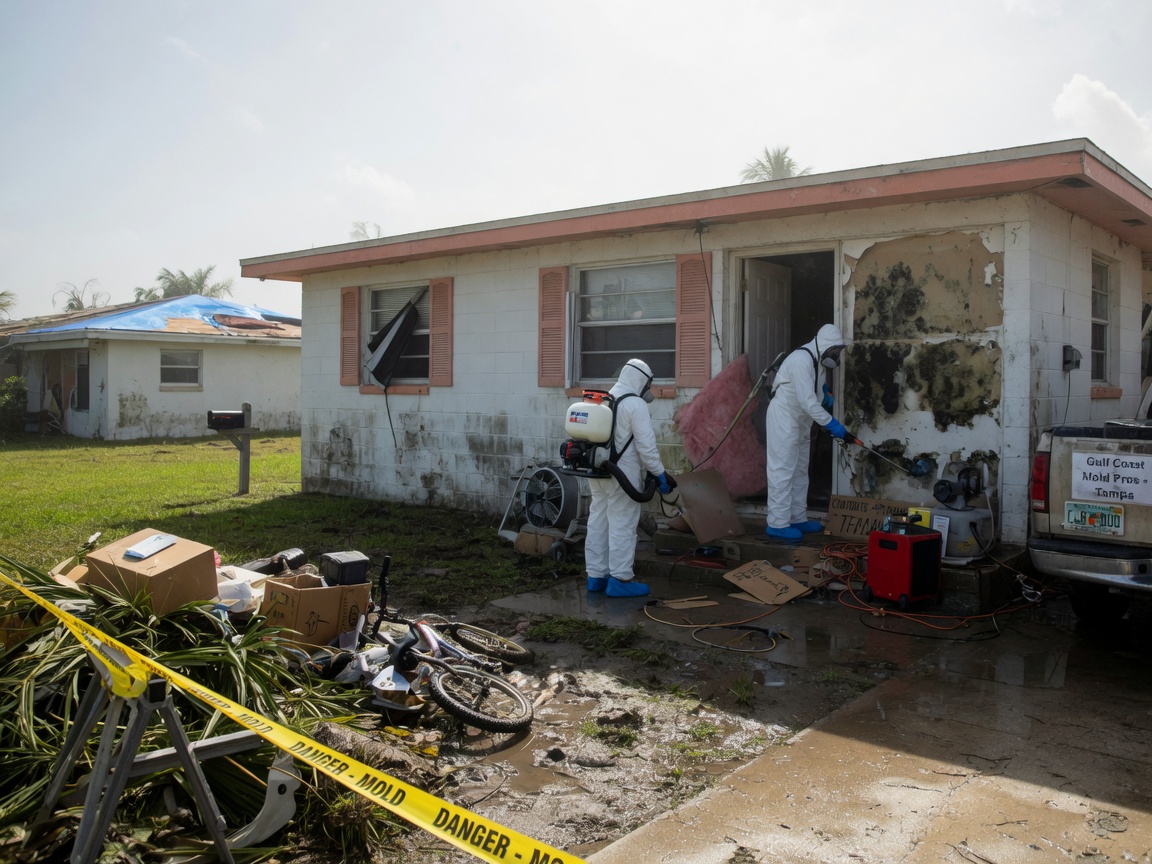
After a hurricane or flood in Tampa, effective mold remediation starts with immediate water extraction and drying within 24 to 48 hours to limit spore spread, followed by targeted removal in affected structures throughout Hillsborough County.
Assessing Flood Damage in Tampa Neighborhoods
Hillsborough County homes in low-lying spots like Davis Islands and South Tampa often face saltwater intrusion during storms, which penetrates older plaster walls and hardwood floors common in Seminole Heights and Ybor City Historic District properties. These materials hold moisture longer than modern builds, allowing black mold colonies to establish behind baseboards within days. Homeowners should inspect attics and crawl spaces first, as roof leaks from high winds combine with the area's wet summers to trap humidity. Properties near the Tampa Riverwalk or Lowry Park Zoo may also see groundwater seepage that affects foundations differently than inland areas like Brandon. A full visual and moisture-meter check reveals hidden growth before it spreads to HVAC systems.
Drying and Containment Steps After Storms
Professional teams begin by setting up containment barriers to isolate wet zones in homes from Downtown Tampa to Hyde Park, preventing cross-contamination during removal. High-velocity air movers and dehumidifiers run continuously to drop indoor humidity below 50 percent, countering the subtropical climate that normally keeps levels high. In West Tampa bungalows with tight crawl spaces, technicians remove saturated insulation and treat subfloors with antimicrobial solutions. This phase typically lasts 3 to 5 days depending on square footage and material porosity. Water damage restoration protocols ensure no standing water remains near the Florida Aquarium vicinity, where storm surges can linger in yards.
Mold Removal Techniques for Hurricane-Affected Homes
Once dry, remediation focuses on physical removal rather than surface cleaning alone, especially in older Ybor City structures where porous wood framing harbors roots. HEPA vacuums and wire brushing address visible colonies on drywall and studs, while negative air machines capture airborne spores. Mold remediation in flood zones often requires discarding porous items like carpet padding that cannot be salvaged. Technicians in Seminole Heights frequently encounter growth in wall cavities after roof breaches, requiring selective demolition. The process avoids bleach on porous surfaces because it fails to reach embedded hyphae in Florida's persistent moisture environment.
Long-Term Prevention in Humid Subtropical Conditions
Post-remediation, sealing entry points and improving ventilation stops recurrence during the wet season. Installing vapor barriers in crawl spaces of South Tampa homes reduces soil moisture migration that worsens after heavy rains. Homeowners near Busch Gardens should monitor indoor levels with hygrometers, as the climate encourages regrowth if humidity climbs above 60 percent. How Florida’s humidity causes mold growth indoors explains seasonal patterns that affect Hillsborough County properties year-round. Regular checks around windows and doors in Davis Islands prevent small leaks from turning into larger issues after future storms.
24/7 Response for Local Homeowners
MoldFix FL remains open 24 hours, 7 days a week to handle urgent calls from Brandon and Clearwater residents whose homes sustain damage during hurricane season. Early intervention limits secondary issues like structural rot in older Hyde Park residences. Mold hurricane damage services coordinate with insurance adjusters while prioritizing safe containment. This availability matters most when power outages delay drying and allow spores to multiply quickly in the subtropical heat.