
2026-08-19 · Marcus Purdee
Mold Remediation After a Plumbing Leak: What to Do First
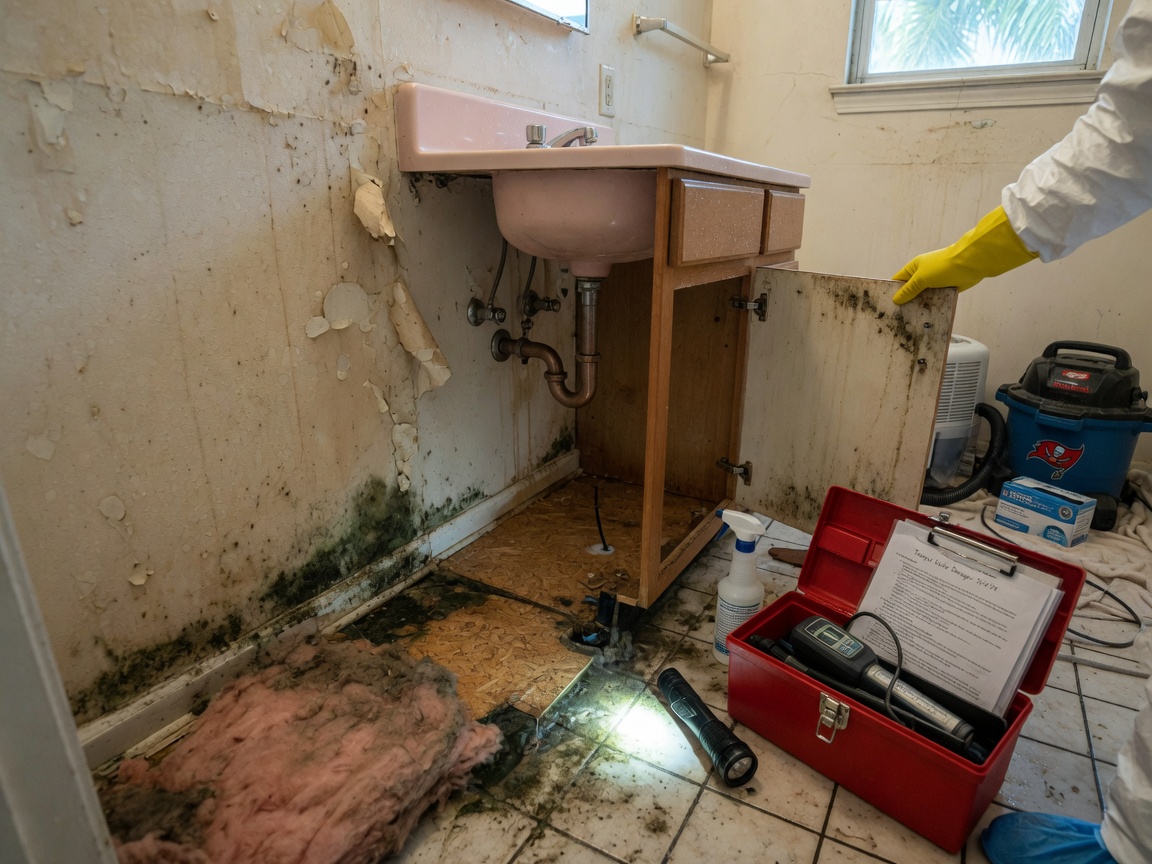
After a plumbing leak hits a Tampa home, the first step is to shut off the water supply at the main valve and remove standing water to limit moisture that feeds mold in Hillsborough County’s humid subtropical climate with wet summers. This immediate action prevents rapid growth that often appears within 24 to 48 hours in older housing stock common in areas such as Ybor City Historic District or Seminole Heights, where pipes from past decades can fail without warning. Next, isolate the affected zone by closing doors and using plastic sheeting if safe, then document the damage with photos before any cleanup begins. In South Tampa or Davis Islands properties near the water table, leaks can seep into slabs or crawl spaces, making containment critical right away.
Stop the Leak and Assess Visible Damage
Locate and shut off the source, whether it is a burst pipe under a sink in a West Tampa bungalow or a failing joint in a Downtown Tampa condo. Once water flow stops, inspect nearby drywall, flooring, and cabinets for saturation, noting how Tampa’s frequent summer rains compound indoor humidity and push moisture deeper into materials. Homeowners in Hyde Park often find leaks traveling along joists into adjacent rooms, so check ceilings below bathrooms and laundry areas. Avoid disturbing porous surfaces until a full evaluation occurs, because stirring spores can spread them through HVAC systems common in these older builds. This phase sets the stage for targeted remediation rather than broad disruption.
Contain Moisture to Prevent Spread
Seal off the room with heavy plastic and tape at seams and vents to keep humidity from migrating, especially important during wet summers when outdoor air already carries high moisture levels across Brandon and Clearwater commutes. Use fans only if they exhaust outdoors and never into unaffected spaces, as circulating damp air accelerates growth on surfaces in Seminole Heights homes with limited ventilation. In properties near the Tampa Riverwalk or Lowry Park Zoo, where groundwater sits close to foundations, floor leaks demand quick barriers to stop wicking into subfloors. Monitor indoor humidity with a meter if available, aiming to keep levels below 60 percent until professionals arrive. These containment steps reduce the scope of later work in crawl spaces or attics typical of local construction.
Contact Professionals for Proper Evaluation
Reach out to a team available Open 24 Hours, 7 Days a Week to perform moisture mapping and air sampling that identifies hidden colonies behind walls. In Hillsborough County homes, a plumbing leak often affects multiple layers, so visual checks alone miss growth in insulation or ductwork near Busch Gardens or the Florida Aquarium neighborhoods. Professionals use infrared tools to trace water paths that travel from a second-floor bath down to first-floor living areas in South Tampa. This assessment distinguishes surface issues from structural ones and guides safe removal without cross-contamination. Delaying this step allows spores to colonize faster in the region’s consistent warmth and humidity.
Follow-Up Steps and Long-Term Prevention
After initial containment, schedule water damage restoration alongside remediation to dry affected materials thoroughly before any rebuild. Residents in Ybor City Historic District should also review how Florida’s humidity causes mold growth indoors to understand seasonal patterns that make leaks more problematic. Compare options through mold removal vs. mold remediation to select the approach that matches the leak’s extent. Finally, inspect plumbing regularly in older West Tampa or Davis Islands houses and maintain proper drainage around foundations to reduce future incidents in the subtropical environment.