
2026-08-19 · Marcus Purdee
Attic Mold in Florida: Causes, Warning Signs, and Removal
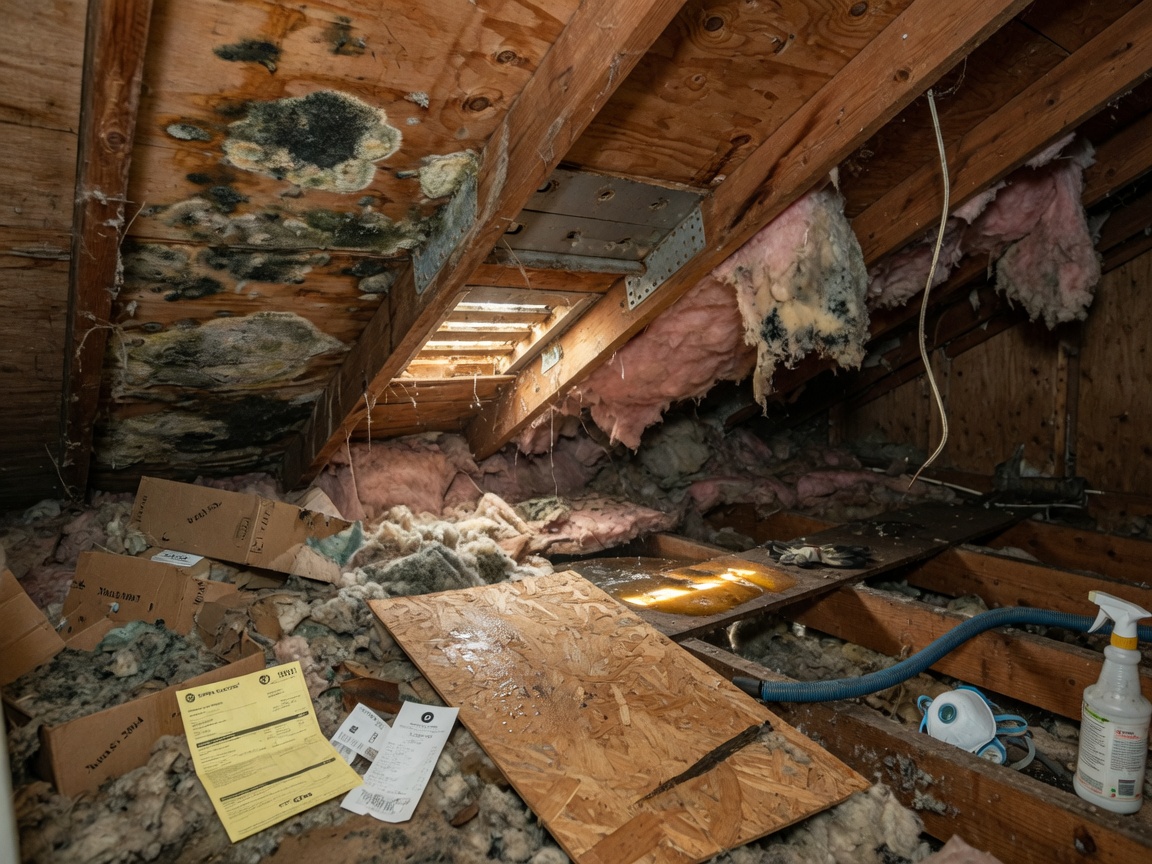
Attic mold develops in Tampa homes primarily through roof leaks combined with inadequate ventilation during the region's humid subtropical climate and wet summers. In neighborhoods such as Seminole Heights and Ybor City, older roofs on 1940s-1960s housing stock trap condensation that feeds growth on rafters and insulation. Hillsborough County properties near the Tampa Riverwalk or Davis Islands see similar issues when summer rains overwhelm gutters and flashing. Prompt attention prevents spread into living spaces below.
Common Causes in Hillsborough County Attics
Tampa's wet summers deliver frequent heavy downpours that penetrate aging shingles and flashing in areas like Hyde Park and West Tampa. Poor attic ventilation allows humid air to linger, especially in homes built before modern ridge vents became standard. Condensation forms on cooler roof decking during temperature swings common in South Tampa and Downtown Tampa. Nearby cities such as Brandon and St. Petersburg share these patterns, where proximity to water bodies increases ambient moisture levels year-round. These conditions turn minor roof issues into widespread mold colonies within weeks.
Homeowners in Seminole Heights often discover mold after noticing musty odors drifting from ceiling registers. Florida's climate keeps relative humidity above 70 percent for months, driving moisture through soffit vents that lack proper baffles. Low-slope roofs on some Davis Islands properties trap water longer than steeper designs found elsewhere in Hillsborough County. Each of these factors requires targeted inspection rather than generic fixes.
Identifying Warning Signs Early
Discolored rafters or black spotting on insulation signal active growth in Tampa attics. Musty smells that intensify after rain point to hidden colonies near roof leaks common in Ybor City Historic District homes. Warped ceiling drywall in South Tampa properties often traces back to attic moisture migrating downward. Homeowners should check for soft insulation or water stains around plumbing vents and skylights, especially after the summer wet season peaks.
Increased allergy symptoms indoors can indicate attic mold spores circulating through HVAC systems in West Tampa residences. Visual checks from the access hatch reveal fuzzy growth on wood members when humidity stays elevated. In older Seminole Heights homes, peeling paint on attic walls frequently accompanies mold because trapped moisture breaks down finishes. Early detection limits damage before remediation becomes extensive.
Effective Removal Process
Professionals begin by containing the attic space to prevent spore spread into living areas of Tampa homes. They remove affected insulation and treat rafters with EPA-registered antimicrobials suited to Florida's persistent humidity. HEPA vacuuming follows to capture remaining particles before new insulation installation. Properties in Hyde Park and Davis Islands often need additional roof repairs coordinated with mold work to stop recurrence.
Ventilation upgrades such as powered attic fans help reduce moisture in post-remediation attics across Hillsborough County. Attic mold removal protocols emphasize source correction over surface cleaning alone. Homeowners in Brandon and Clearwater benefit from follow-up moisture mapping to confirm drying before closing cavities. Thorough documentation of each step supports insurance claims when storm-related leaks trigger the issue.
Long-Term Prevention Strategies
Improving ridge and soffit ventilation reduces condensation risk in Tampa attics during wet summers. Gutter cleaning every three months prevents overflow that leads to leaks in older neighborhoods like Ybor City. Installing vapor barriers on attic floors helps in homes where humidity from below infiltrates insulation. Residents near Lowry Park Zoo or the Florida Aquarium often add dehumidifiers in crawl spaces that connect to attic airflow.