
2026-08-19 · Marcus Purdee
Can High Indoor Humidity Cause Mold in Florida Homes?
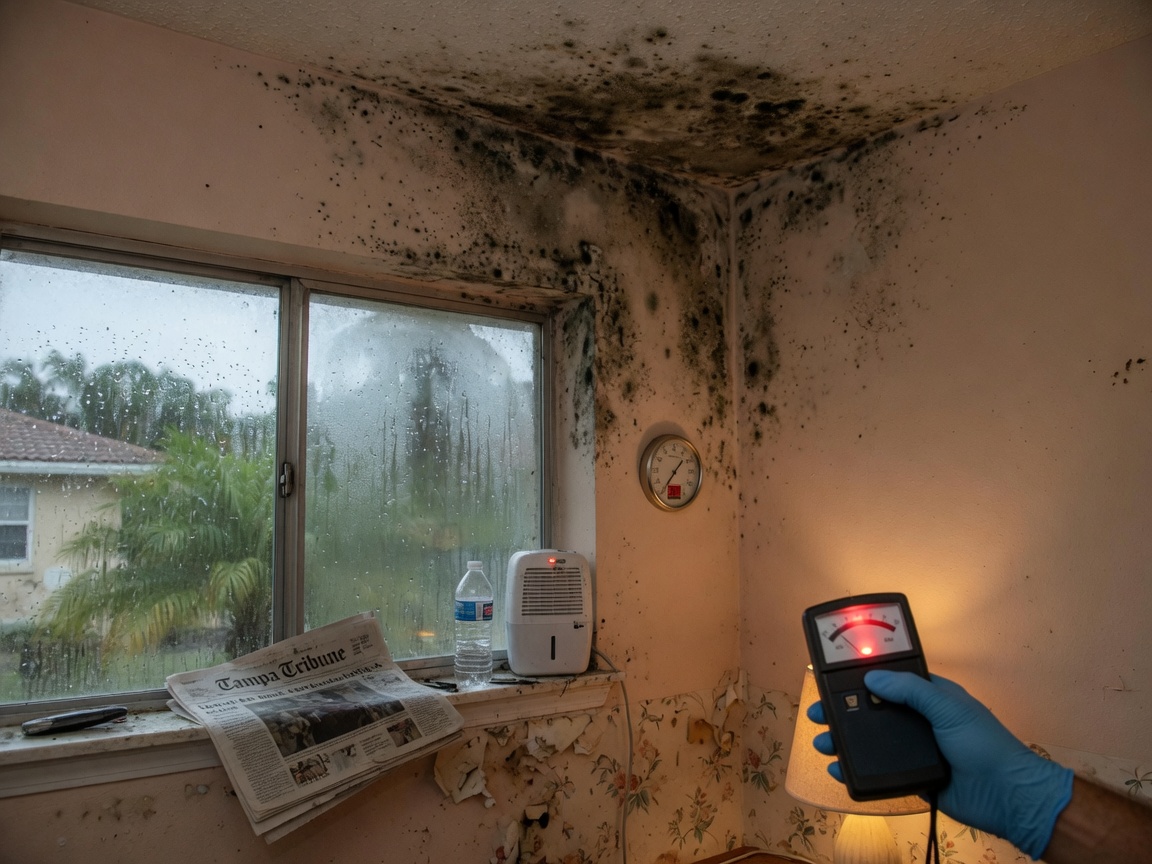
Yes, high indoor humidity above 60% relative humidity for more than a few days can cause mold in Florida homes, particularly in older housing stock throughout Hillsborough County where air conditioning systems struggle against the humid subtropical climate with wet summers.
How Humidity Levels Trigger Mold Growth
Mold spores exist in every Tampa home but remain dormant until moisture levels allow them to colonize. When indoor relative humidity stays between 60% and 70% for extended periods, drywall, wood framing, and insulation absorb enough moisture to support growth within 24 to 48 hours. In neighborhoods such as Seminole Heights and Ybor City Historic District, many homes built before 1970 lack modern vapor barriers, so humidity penetrates walls more readily during afternoon thunderstorms common from June through September. Homeowners often notice musty odors first in bathrooms and closets before visible discoloration appears on baseboards or ceiling corners. Keeping indoor humidity below 50% through consistent dehumidification and ventilation prevents the initial spore activation that leads to larger colonies later.
Tampa's Climate and Its Impact on Indoor Humidity
Tampa's location in Hillsborough County creates persistent humidity challenges that differ from drier inland areas like Brandon. The wet summer pattern delivers frequent rain and temperatures in the 80s and 90s, pushing outdoor humidity above 80% for weeks at a time. This forces air conditioning units to run longer, yet many systems in South Tampa and Davis Islands homes are sized for cooling rather than moisture removal, leaving indoor levels at 55% or higher. Older construction in West Tampa and Hyde Park often features single-pane windows and minimal insulation, allowing humid air to infiltrate even when the AC runs. During the drier winter months, occasional cold fronts can create condensation on cooler surfaces inside the home, restarting the cycle in attics and crawl spaces that receive less airflow.
Common Areas in Tampa Homes Prone to Humidity-Related Mold
- Bathrooms and laundry rooms in Downtown Tampa condos and Hyde Park bungalows see daily steam from showers that raises local humidity quickly.
- Attics over homes near the Tampa Riverwalk trap heat and moisture when ridge vents are undersized or blocked.
- Crawl spaces beneath elevated structures in Davis Islands allow ground moisture to rise during prolonged wet periods.
- HVAC systems serving larger homes in South Tampa accumulate condensation that drips onto nearby ductwork if drains clog.
These locations require targeted monitoring because general whole-house dehumidifiers may not reach isolated pockets of stagnant air.
Steps to Monitor and Control Indoor Humidity
Start by placing digital hygrometers in at least three locations per floor, checking readings each morning and evening during peak summer months. Run exhaust fans for 20 minutes after showers and cooking, and empty dehumidifier collection tanks daily rather than relying on auto-shutoff features. Seal gaps around windows and doors with weatherstripping to reduce infiltration from the humid outdoor air common along the Tampa Riverwalk corridor. If readings remain above 55% despite these efforts, schedule a professional assessment that includes moisture mapping of walls and subfloors. For persistent issues tied to past water events, review guidance in Mold Remediation After a Plumbing Leak: What to Do First before conditions worsen.
When to Seek Professional Help
Persistent readings above 60% or visible growth on more than 10 square feet of material indicate the need for trained intervention rather than DIY cleaning. In areas like Ybor City Historic District, where historic preservation rules limit certain modifications, specialists familiar with local building practices can isolate affected zones without compromising original structures. MoldFix FL remains open 24 hours, 7 days a week to respond when sudden humidity spikes from storms create urgent conditions. Homeowners in nearby cities such as St. Petersburg and Clearwater face similar challenges and often benefit from the same humidity-focused protocols used in Hillsborough County. For detailed comparison of removal versus full remediation approaches, see Mold Removal vs. Mold Remediation: What Is the Difference?. Additional prevention strategies for high-moisture rooms appear in Bathroom Mold in Florida: Causes, Prevention, and Remediation. Early action keeps small humidity-driven issues from requiring Mold Remediation across multiple rooms.