
2026-08-19 · Marcus Purdee
How to Find Hidden Mold in Florida Homes
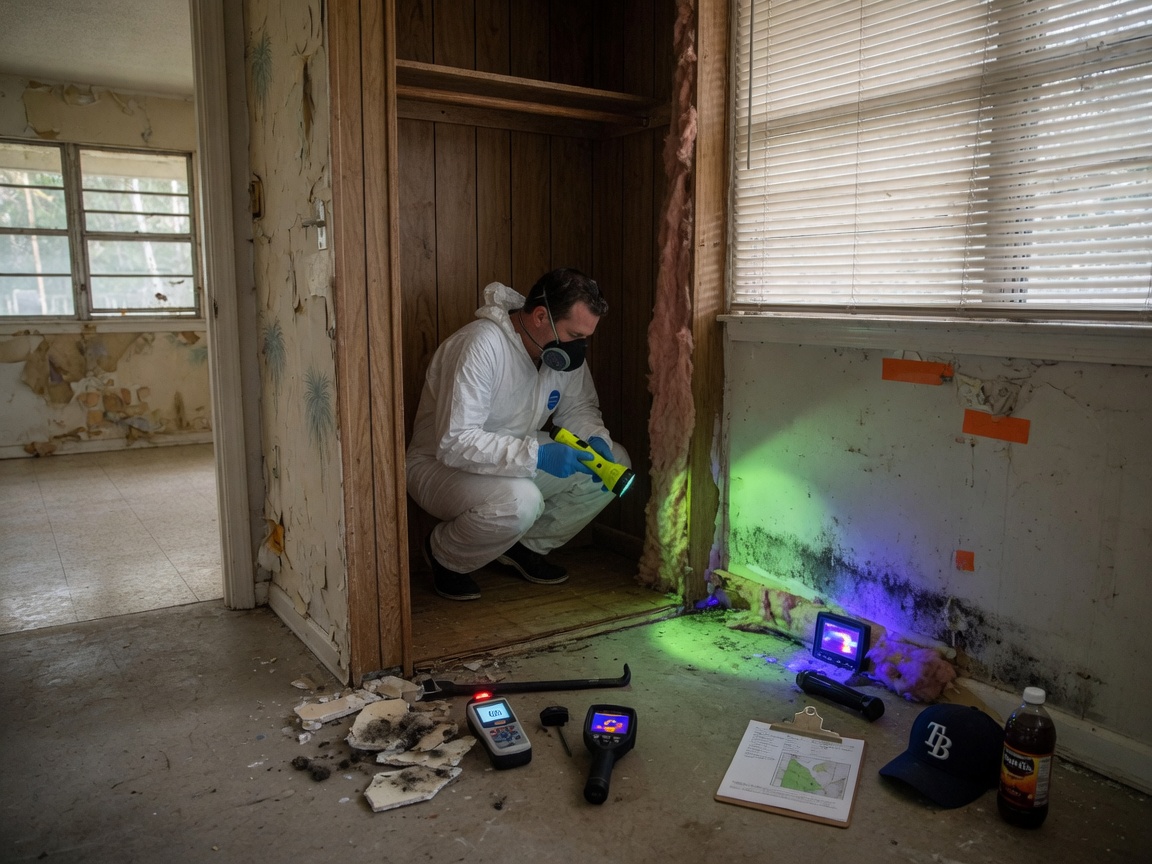
Hidden mold in Florida homes often hides in attics, behind drywall, and within crawl spaces after roof leaks or poor ventilation, and you locate it through targeted moisture checks and odor tracing in areas like South Tampa and Ybor City Historic District.
Inspecting Attics and Roof Spaces in Older Tampa Homes
Tampa's humid subtropical climate with wet summers drives moisture into attics of homes built before 1980 in neighborhoods such as Seminole Heights and Hyde Park. Start by entering the attic during daylight and scanning for dark stains on rafters or insulation near roof penetrations. Use a moisture meter on wood framing to read levels above 15 percent, which signals active growth. Check around HVAC ducts and bathroom exhaust fans that vent into the space, as these create condensation points common in Davis Islands properties. Look for sagging insulation or musty smells that intensify near the peak. In homes with tile roofs, examine flashing around chimneys and skylights where wind-driven rain from summer storms penetrates. These steps uncover mold before it affects living areas below.
Checking Crawl Spaces and Foundation Areas
Crawl spaces under homes in West Tampa and Downtown Tampa trap humidity from the ground, especially where soil stays damp year-round in Hillsborough County. Enter during dry periods and measure relative humidity with a hygrometer; readings over 60 percent indicate risk. Scan floor joists and subflooring for white or black growth patches near plumbing lines. Probe soil with a meter to identify standing water pockets that form after heavy rains. Older brick piers in Ybor City homes often show efflorescence, a sign of repeated wetting that feeds mold on nearby wood. Note any torn vapor barriers that allow ground moisture to rise. These inspections reveal hidden colonies that send spores upward through floor gaps into kitchens and bathrooms.
Detecting Mold Behind Walls and in HVAC Systems
Walls in South Tampa and Lowry Park Zoo area homes conceal mold after pipe bursts or window leaks, particularly in stucco exteriors common to the region. Tap drywall with a rubber mallet to listen for hollow sounds indicating delamination from moisture. Insert a moisture probe through small holes at baseboards to test for readings above 20 percent. For HVAC systems, remove return air grilles and inspect coils for slime buildup that circulates spores house-wide. Homes near the Tampa Riverwalk experience higher indoor humidity from proximity to water, accelerating growth in ductwork. Pair these checks with a thermal camera to spot cold spots behind plaster where condensation forms. Such methods locate colonies without full demolition.
When to Call Local Experts for Confirmation
After self-checks in Brandon or Clearwater homes show consistent moisture or odors, professional Mold Detection confirms the extent through air sampling and surface swabs. Compare findings to Can High Indoor Humidity Cause Mold in Florida Homes? for context on seasonal patterns. If growth exceeds 10 square feet, Mold Remediation addresses it safely. MoldFix FL remains available Open 24 Hours, 7 Days a Week for assessments in affected properties.